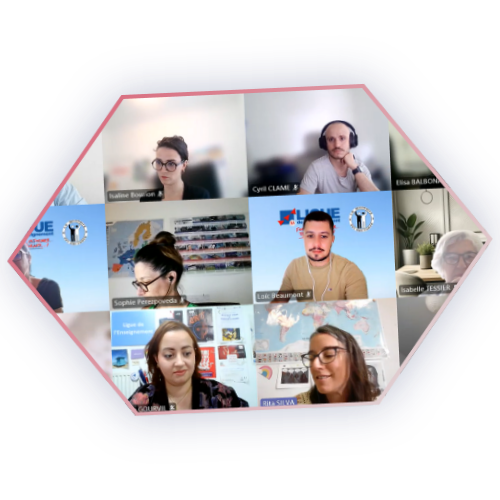
On 3 July 2026, from 10 a.m. to 12:30 p.m., the final multiplier event of the DigCompAE project was held online, on the theme « Adults' digital skills: recognising, assessing, supporting ». This highlight event was an opportunity to present the outcomes of three years of European work, to discover the tools developed, and to discuss digital inclusion during a round table bringing together several stakeholders from the region.
1The DigCompAE project and its outcomes
A European project to embed digital skills into adult education.
Supported by the Erasmus+ programme, the DigCompAE project (2023–2026, 34 months) aimed to integrate the European Digital Competence Framework DigComp into adult education. Its ambition: to develop tools and training courses tailored to trainers and digital mediators, and to contribute to the lasting adoption of DigComp in training systems across Europe.
A European KA220 partnership – Adult Education
Coordination: VHS Hannover (Germany).
Partners: Nevelők Háza Egyesület (Hungary), UPI – Ljudska univerza Žalec (Slovenia),
Die Wiener Volkshochschulen (Austria), Consorzio O.P.E.N. (Italy), Folkuniversitetet (Sweden)
and the Ligue de l'enseignement Nouvelle-Aquitaine (LENA).
The DigComp framework identifies 21 digital competences grouped into 5 broad areas:
Information & data
Browse, evaluate and manage digital information.
Communication & collaboration
Interact, share and collaborate online.
Content creation
Create and edit digital content.
Protection & safety
Protect devices, data, health and the environment.
Problem solving
Solve difficulties and identify your needs.
The results in France
The training sessions mainly brought together trainers and training coordinators, digital mediators and employment/integration advisers, with a very good level of satisfaction regarding the clarity of the content and strong motivation to explore DigComp further.
The project also produced a report of practices and recommendations at European level, highlighting good practices (modular training, playful tools, collaboration with businesses) and key recommendations:
- Strengthen digital infrastructure and the training of trainers.
- Harmonise certifications and create flexible learning pathways.
- Involve businesses and raise awareness among the most vulnerable audiences.
2The DigCompAE tools developed
Practical resources to recognise, assess and support digital skills.
The project produced a complete training course as well as a range of educational tools enabling trainers to master the DigComp framework and to integrate it holistically into their activities.
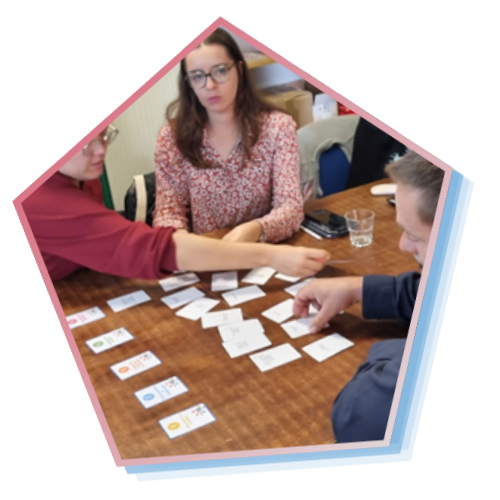
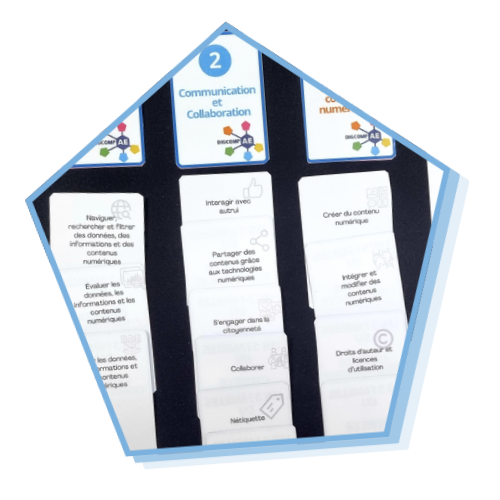
The « Five Families » game
To understand the areas and competences of the framework in a playful way — also available in a digital version.
The proficiency levels
A tool to grasp the 8 proficiency levels of the framework (digital versions such as Beekast / Kahoot).
The DigCompAE method
Identify the competences, formulate the DigComp mapping, then recognise the skills acquired.
Training programme
A ready-to-use programme to train teams in DigComp, Pix and the creation of educational scenarios.
3The round table
Digital inclusion and training
« Experiment, recognise, certify »




The discussions offered an opportunity to compare on-the-ground perspectives on digital inclusion: how to experiment with new approaches for target audiences, recognise the skills acquired and embed them in certification pathways.
For more information about the DigCompAE project